“Specialized trade fairs are strategic: they are an essential source of knowledge.”
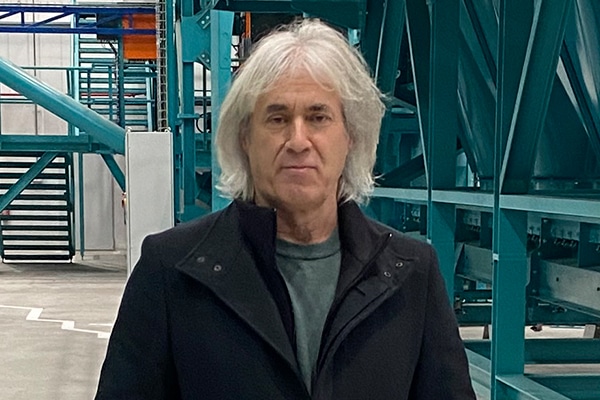
With a solid track record of over two decades developing technological solutions for waste treatment and process optimization, Javier de la Fuente Muñoz has transformed GSR-TECNOPROIN into a leader in the sector. His commitment to efficiency, sustainability, and technical rigor led the Murcia-based company to receive the NOVA Award in the SME category in February 2025, recognizing the innovation of its urban waste treatment system based on Renowaster Tubular technology.
His leadership, grounded in a deep understanding of the sector and a clear results-oriented approach, has enabled GSR-TECNOPROIN to anticipate market challenges and consolidate a forward-looking model: automation, continuous improvement, and environmental commitment. In this interview, we explore his vision, the challenges of the present, and the crucial role of technology in the transformation of the industry.
His professional career began in the food sector, with almost 30 years designing and manufacturing machinery for the industry. How did that experience become the foundation of GSR-TECNOPROIN, and why did he decide to focus on the valorization of municipal waste?
Indeed, our professional journey began in the food industry, where we spent almost three decades developing machinery and processes. Over time, we saw an opportunity to transfer some of that knowledge—especially in processing and automation technologies—to the field of municipal waste. Thus began a period of continuous learning: what is installed in our plant today bears little resemblance to the initial design, the result of constant improvements and the project’s own evolution.
When we founded GSR-TECNOPROIN in 2019, we did so with a clear conviction: it was necessary to offer, within our means, a real alternative to the traditional landfill model. The decomposition of waste generates large emissions of methane, a potent greenhouse gas, in addition to causing landscape and water pollution. Faced with this impact, we felt the responsibility—and also the enthusiasm—to develop a more sustainable solution. Our project was born, therefore, from the union of two passions: entrepreneurship and environmentalism. We wanted to showcase the value of technology, yes, but also to promote a model capable of transcending its limitations and generating a positive impact on society.
If you had to explain GSR-TECNOPROIN’s mission in a single sentence, what would it be?
GSR-TECNOPROIN provides a real solution to the problem of municipal solid waste: zero emissions, no water pollution, and energy self-sufficiency.
One of your company’s most successful innovations is the Renowaster Tubular System, which has generated interest for recovering up to 95% of materials without prior sorting. What is the technical basis of the process, and what type of companies is it aimed at?
It’s a bacterial deactivation process using pasteurization and sterilization (eliminating odors), changing the morphology of the bacteria and allowing for the efficient separation of the byproducts that make up the characterization of MSW (municipal solid waste). Essentially, it’s a thermal hydrolysis process that allows for higher yields of thermally stabilized organic matter for biogas production. It’s a solution aimed at private and public companies that manage municipal solid waste (MSW), processing MSW, wastewater treatment plant sludge, beach algae, and landfill waste.
How does your technology contribute to circular economy objectives and the goals of reducing emissions and resource consumption?
Our process is “pure” circular economy. We process 100% of what enters the plant and recycle more than 90%; the rest is inert. Some of the recycled components return to the production chain. Furthermore, the plant is self-sufficient, doesn’t consume water resources, and the process water is always the same in a closed loop. By processing on-site, we prevent greenhouse gases from being released into the atmosphere and avoid generating the dreaded and hidden leachate, which is currently one of the serious problems facing landfills.
Where has this technology already been installed or tested?
Yes, the plant has been installed and tested in Lorqui (Murcia), which is an industrial plant. Another similar plant was installed in Nova Scotia (Canada); this was the first and is dedicated exclusively to the production of pyrolytic oil. Currently, we are finalizing installations in various locations throughout Spain with consortiums and provincial councils.
What assessment do you draw from these experiences?
The results obtained coincide with the design projections, and their value is especially apparent when compared to current market solutions: a plant that occupies very little space compared to extensive landfills, without generating leachate or requiring ponds, and with a fully automated process, unlike traditional landfill operations.
Last year you received the NOVA Award for SMEs for Innovation in Industrial Processes. What did this award mean for you and your company?
A recognition of “constant constancy” and perseverance, despite the slowdown that always comes with working with the public administration.
Let’s talk now about the market and the environment. How do you see the evolution of the waste sector in Spain in the coming years? In other words, what technological challenges do you think will define the next decade in waste valorization?
It’s common knowledge that the European directive is extending the deadlines for regulatory compliance, now with a 2030 target date, by which landfills should be phased out as we currently perceive them (highly polluting and problematic). Fees are being raised to compel municipalities, consortia, and provincial councils to seek alternatives to burying waste, in addition to charging a tax for transporting waste to landfills.
Fortunately, we have well-tested technologies at our disposal, such as biogas generation, gasification, and pyrolysis, which can provide comprehensive solutions for municipal solid waste. And there are others emerging, such as green hydrogen. In any case, municipal solid waste has various uses, all governed by protocols established by the environmental regulations of each autonomous community. The last thing we should do, as established by the European directive, is incineration—that is, not burning resources.
In this regard, what new lines of research or development does GSR-TECNOPROIN have underway, and what would be its greatest wish for the waste management sector?
At GSR-TECNOPROIN, we are committed to two lines of work: supplying a critical mass of thermally stabilized organic matter mixed with other waste for anaerobic digesters (biogas generation) and the production of pyrolytic oil (through pyrolysis plants).
Focusing specifically on Spain, what do you consider to be the main structural challenges of recycling today, both in terms of technology and awareness, investment, and coordination between public administrations and the private sector?
We still generate waste.
Recycling and recovery processes also face the challenge of controlling and filtering emissions (dust, gases, odors, volatile compounds, etc.). From your experience, what are the main problems associated with these emissions in current plants, and what technological or design solutions are most effective in mitigating them?
Currently, there are enough applicable technologies for the treatment of municipal solid waste. In our case, everything is encapsulated, but we have had to install bag filters, cyclones, biofilters, etc.—well-established technologies.
Polusolidos has established itself as a meeting point for professionals in the capture, filtration, and purification of emissions in industrial processes. Do you believe a specialized trade fair of this type is necessary for the sector? Why do you consider it strategic for promoting innovation, collaboration, and industrial development?
Absolutely. We have needed to rely on these technologies for capturing, filtering, and purifying emissions in industrial processes, as required by the environmental license to obtain the necessary authorizations to start up our municipal solid waste (MSW) treatment plant. And these types of trade shows are always a valuable source of industry knowledge.
On a personal level, what motivates you to continue innovating in such a complex sector as waste management?
In any activity or project, you have to try to make it stimulating and enjoyable—in short, enjoy what you do. This is what drives us to keep innovating.